
🦷 What is Preventive Dentistry? A Complete Guide to Oral Health.
Learn what preventive dentistry is, its benefits, and how regular dental care can help maintain healthy teeth and gums. Expert tips from Dr. Sunil Kumar, Bhiwani.
Preventive dentistry is a branch of dental care focused on maintaining good oral health and preventing dental problems before they occur. It includes a combination of regular dental check-ups, cleanings, and healthy daily habits like brushing and flossing.
Taking care of your teeth early helps you avoid serious dental issues and ensures a healthy, confident smile for life.
“Prevention is always better than cure—especially when it comes to your smile.”
— Dr. Sunil Kumar, Dentist in Bhiwani
🦷 What is Preventive Dentistry?
Preventive dentistry involves routine dental care practices that help keep your teeth and gums healthy.
It includes:
- Regular oral examinations (every 6 months)
- Professional teeth cleaning
- Routine X-rays (if needed)
- Developing good oral hygiene habits
Preventive care starts from childhood and continues throughout life.
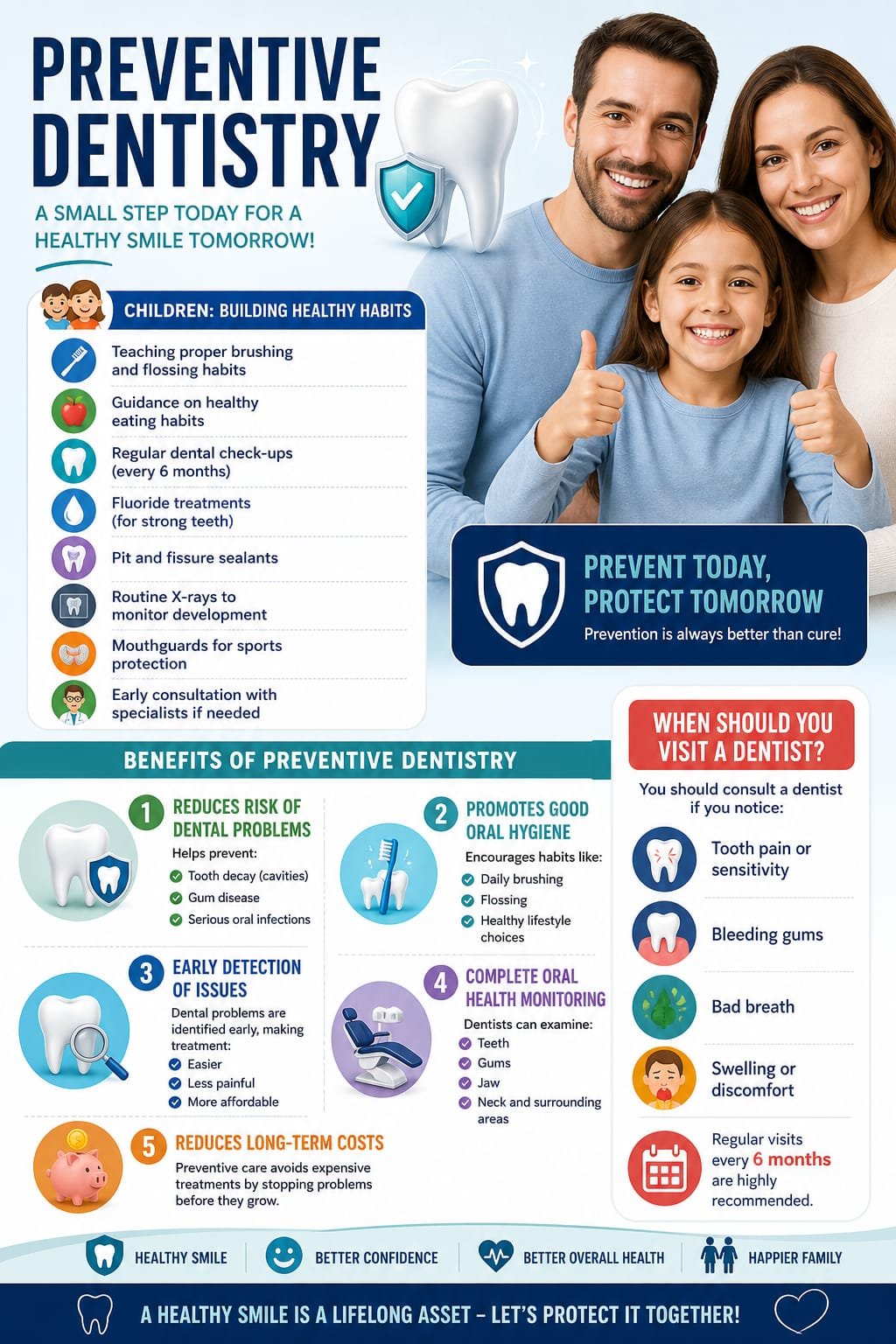
What is Preventive Dentistry for Children?
Preventive dental care for children begins as soon as their first tooth appears. Early care helps in identifying problems before they become serious or costly.
Key preventive services for children:
- Teaching proper brushing and flossing habits
- Guidance on healthy eating habits
- Regular dental check-ups (every 6 months)
- Fluoride treatments (for strong teeth)
- Pit and fissure sealants
- Routine X-rays to monitor development
- Mouthguards for sports protection
- Early consultation with specialists if needed
✅ Benefits of Preventive Dentistry
Regular preventive dental care offers multiple long-term benefits:
1. Reduces Risk of Dental Problems
Helps prevent:
- Tooth decay (cavities)
- Gum disease
- Serious oral infections
2. Promotes Good Oral Hygiene
Encourages habits like:
- Daily brushing
- Flossing
- Healthy lifestyle choices
3. Early Detection of Issues
Dental problems are identified early, making treatment:
- Easier
- Less painful
- More affordable
4. Complete Oral Health Monitoring
Dentists can examine:
- Teeth
- Gums
- Jaw
- Neck and surrounding areas
5. Reduces Long-Term Costs
Preventive care avoids expensive treatments by stopping problems before they grow.
When Should You Visit a Dentist?
You should consult a dentist if you notice:
- Tooth pain or sensitivity
- Bleeding gums
- Bad breath
- Swelling or discomfort
Regular visits every 6 months are highly recommended.
🦷 Dr. Sunil Kumar Expert Advice
Regular dental check-ups and proper oral hygiene habits are the foundation of lifelong dental health
Conclusion
Preventive dentistry is the key to maintaining strong, healthy teeth and a beautiful smile. With simple daily habits and regular dental visits, you can avoid major dental problems and enjoy long-term oral health.
 Complete Dental Care Guide