WhatsApp Image 2026-06-19 at 1.41.26 PM

🦷 Dental Implants vs Bridges vs Dentures: Which is Better?

Confused between dental implants, bridges, and dentures? Learn the benefits of dental implants and why they are a better long-term solution. Expert advice by Dr. Sunil kumar, Bhiwani.

Missing teeth can affect your smile, confidence, and overall oral health. Today, there are multiple options available to replace missing teeth—dental implants, bridges, and dentures.

Among these, dental implants are considered the most advanced and long-lasting solution. In this blog, we will compare implants with bridges and dentures to help you make the right decision.

“A complete smile not only restores your look but also your confidence.”
— Dr. Sunil Kumar, Dentist in Bhiwani

🦷 What are Dental Implants?

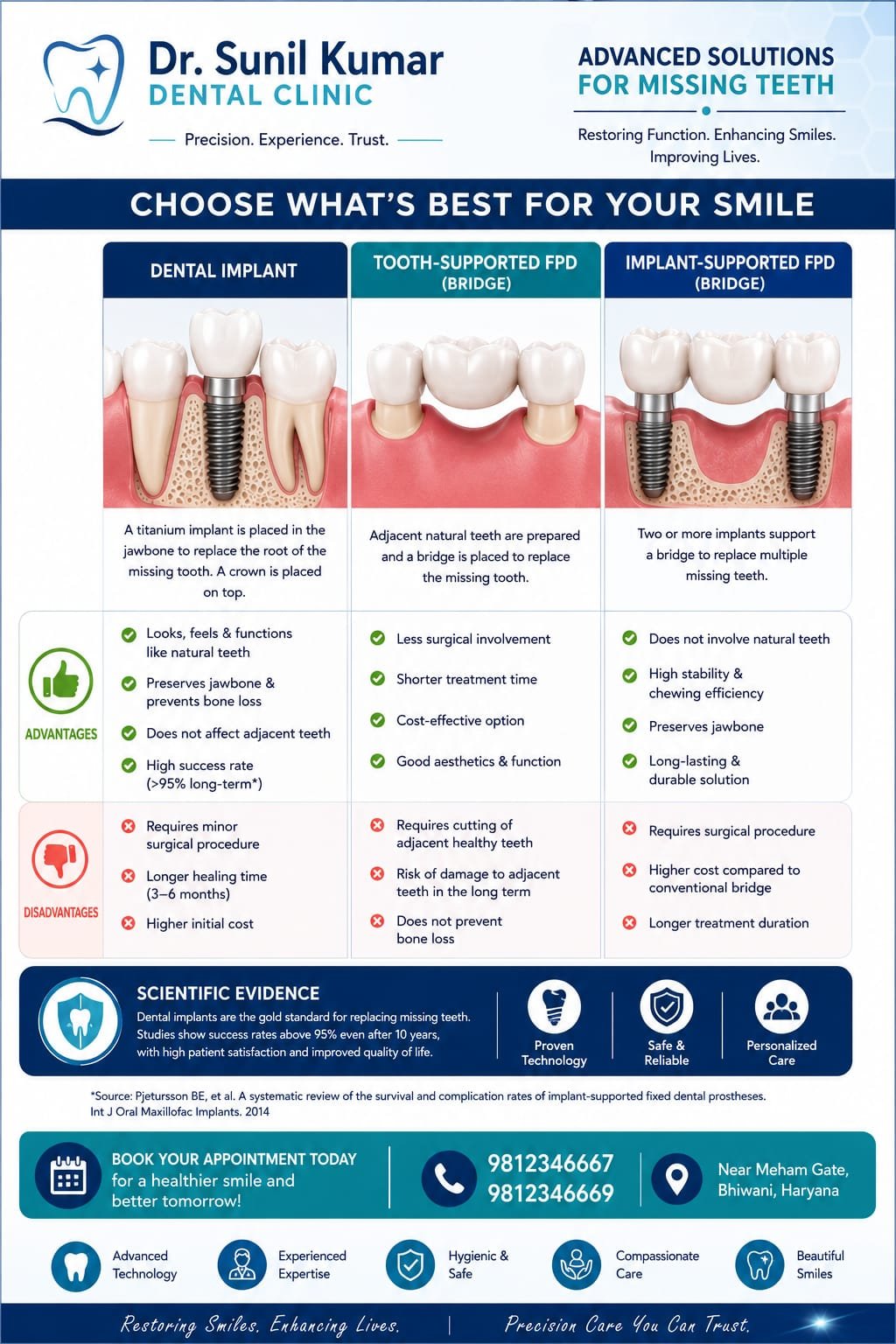
Dental implants are artificial tooth roots made of titanium that are placed into the jawbone. They support crowns, bridges, or dentures and function like natural teeth.

Dental Implants vs Bridges

Dental bridges are used to replace missing teeth by supporting artificial teeth on adjacent natural teeth. However, implants offer several advantages:

Benefits of Implants over Bridges

  • Long-lasting Solution
    Implants can last for many years, often a lifetime with proper care.
  • More Natural Look & Feel
    They look and function like real teeth.
  • Protects Surrounding Teeth
    Bridges require grinding of adjacent teeth, but implants do not damage nearby teeth.
  • Reduces Risk of Decay
    Implants do not increase the risk of decay in neighboring teeth.

Dental Implants vs Dentures

Dentures are removable appliances used to replace multiple missing teeth. While they are affordable, implants provide better comfort and stability.

Benefits of Implants over Dentures

  • Better Stability & Comfort
    Implants are fixed and do not slip like dentures.
  • Improved Chewing Ability
    You can eat comfortably without restrictions.
  • Enhanced Speech
    No movement means clearer speech.
  • Preserves Jawbone
    Implants prevent bone loss, unlike dentures.
  • Improves Quality of Life
    Offers confidence, comfort, and a natural feel.

Why Choose Dental Implants?

Dental implants are ideal for:

  • Single tooth replacement
  • Multiple missing teeth
  • Full mouth rehabilitation

They provide a permanent, strong, and aesthetic solution.

When Should You Consult a Dentist?

If you have:

  • Missing teeth
  • Difficulty chewing
  • Loose dentures
  • Jawbone loss

🦷 Dr. Sunil Kumar Expert Advice

Dental implants are the closest alternative to natural teeth, offering strength, durability, and confidence

Conclusion

While bridges and dentures are useful, dental implants stand out as the most reliable and long-term solution for replacing missing teeth.
WhatsApp Image 2026-06-12 at 3.21.15 PM (3)

🦷 What is Preventive Dentistry? A Complete Guide to Oral Health.

Learn what preventive dentistry is, its benefits, and how regular dental care can help maintain healthy teeth and gums. Expert tips from Dr. Sunil Kumar, Bhiwani.

Preventive dentistry is a branch of dental care focused on maintaining good oral health and preventing dental problems before they occur. It includes a combination of regular dental check-ups, cleanings, and healthy daily habits like brushing and flossing.

Taking care of your teeth early helps you avoid serious dental issues and ensures a healthy, confident smile for life.

“Prevention is always better than cure—especially when it comes to your smile.”
— Dr. Sunil Kumar, Dentist in Bhiwani

🦷 What is Preventive Dentistry?

Preventive dentistry involves routine dental care practices that help keep your teeth and gums healthy.

It includes:

  • Regular oral examinations (every 6 months)
  • Professional teeth cleaning
  • Routine X-rays (if needed)
  • Developing good oral hygiene habits

Preventive care starts from childhood and continues throughout life.

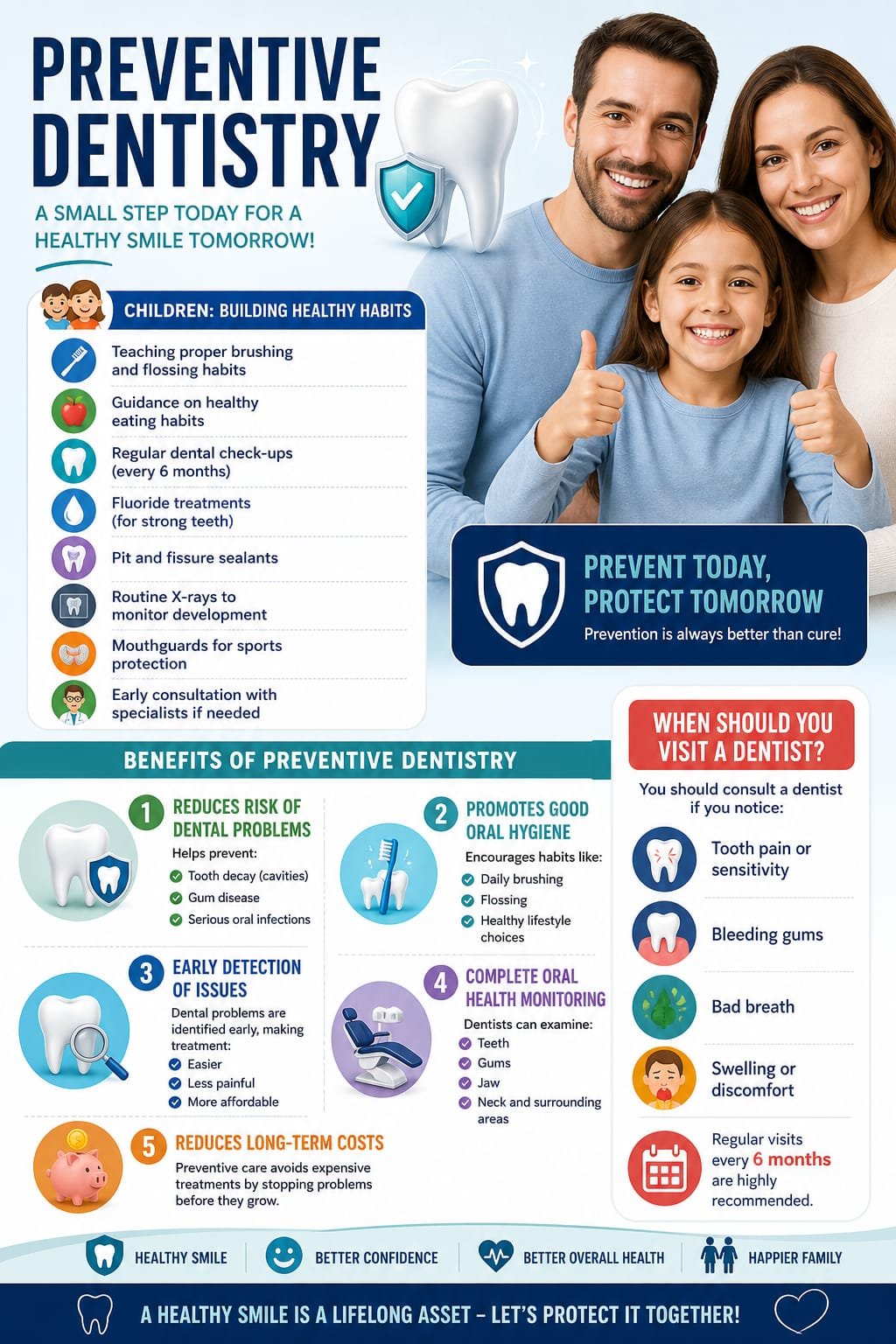
What is Preventive Dentistry for Children?

Preventive dental care for children begins as soon as their first tooth appears. Early care helps in identifying problems before they become serious or costly.

Key preventive services for children:

  • Teaching proper brushing and flossing habits
  • Guidance on healthy eating habits
  • Regular dental check-ups (every 6 months)
  • Fluoride treatments (for strong teeth)
  • Pit and fissure sealants
  • Routine X-rays to monitor development
  • Mouthguards for sports protection
  • Early consultation with specialists if needed

Benefits of Preventive Dentistry

Regular preventive dental care offers multiple long-term benefits:

1. Reduces Risk of Dental Problems

Helps prevent:

  • Tooth decay (cavities)
  • Gum disease
  • Serious oral infections
2. Promotes Good Oral Hygiene

Encourages habits like:

  • Daily brushing
  • Flossing
  • Healthy lifestyle choices
3. Early Detection of Issues

Dental problems are identified early, making treatment:

  • Easier
  • Less painful
  • More affordable
4. Complete Oral Health Monitoring

Dentists can examine:

  • Teeth
  • Gums
  • Jaw
  • Neck and surrounding areas
5. Reduces Long-Term Costs

Preventive care avoids expensive treatments by stopping problems before they grow.

When Should You Visit a Dentist?

You should consult a dentist if you notice:

  • Tooth pain or sensitivity
  • Bleeding gums
  • Bad breath
  • Swelling or discomfort

Regular visits every 6 months are highly recommended.

🦷 Dr. Sunil Kumar Expert Advice

Regular dental check-ups and proper oral hygiene habits are the foundation of lifelong dental health

Conclusion

Preventive dentistry is the key to maintaining strong, healthy teeth and a beautiful smile. With simple daily habits and regular dental visits, you can avoid major dental problems and enjoy long-term oral health.

WhatsApp Image 2026-06-12 at 3.21.13 PM (1)

🦷 Complete Dental Care Guide

Learn the best practices for brushing, healthy eating habits, and essential dental care tips from Dr. Sunil Kumar.

Our teeth play a vital role in our smile and overall health. However, many people do not follow proper oral hygiene practices, which can lead to cavities, toothaches, gum disease, and other dental problems.

If you want your teeth to remain strong, healthy, and beautiful for years to come, adopting the right dental care habits is essential.

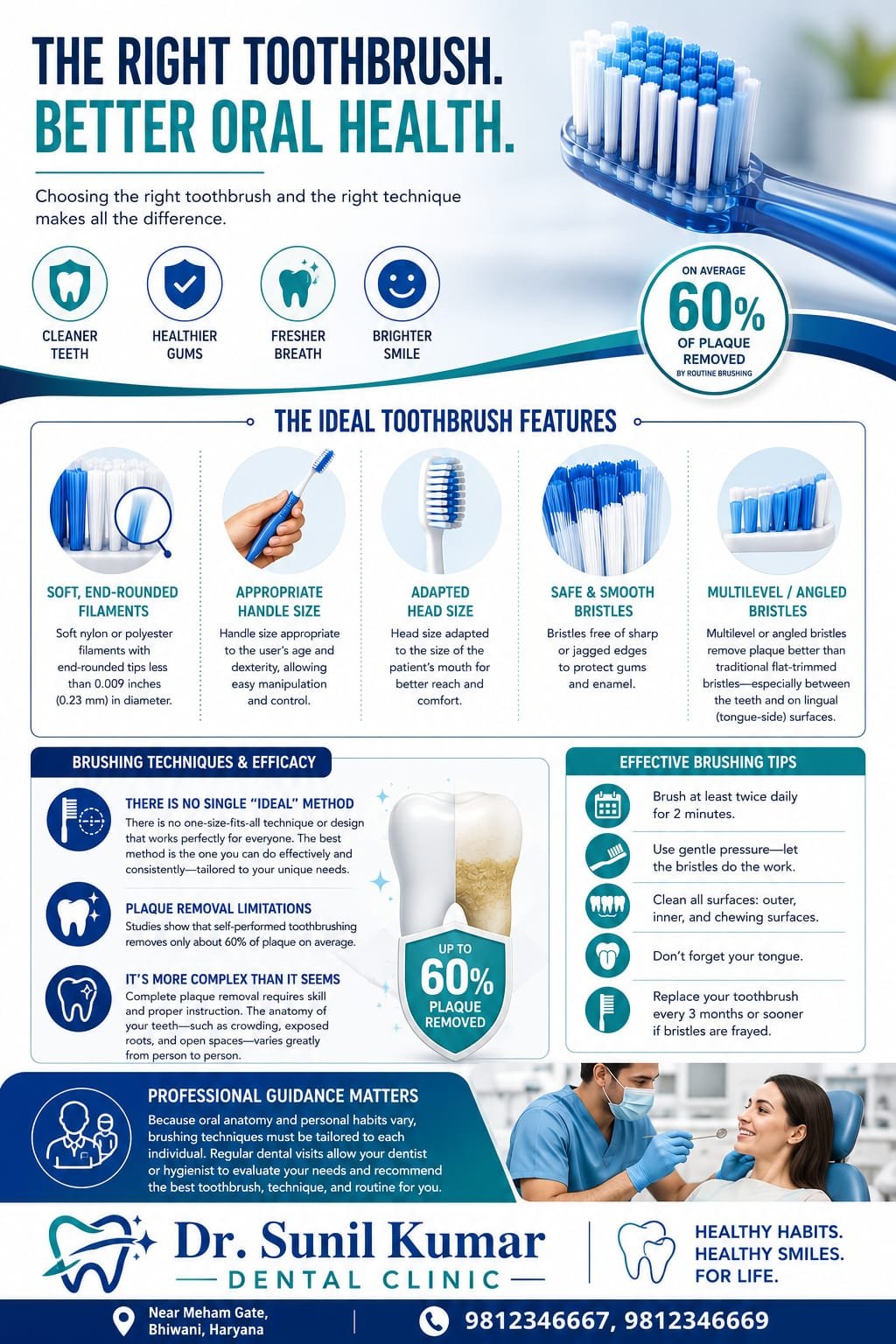
Teeth are covered in a hard outer coating called enamel. Each day, a thin film of bacteria called dental plaque builds up on your teeth. The bacteria in plaque produce acids that can harm enamel and cause cavities. Brushing and flossing your teeth can prevent decay, but once a cavity forms, a dentist must fix it with a filling to avoid further damage.

Use fluoride toothpaste to protect your teeth from decay, especially if you are at a higher risk for tooth decay


1. दिन में दो बार ब्रश करें

    • सुबह और रात को सोने से पहले ब्रश करना जरूरी है

    • फ्लोराइड टूथपेस्ट का उपयोग करें

2. फ्लॉस करना न भूलें

    • दांतों के बीच फंसे खाने के कण निकालने के लिए फ्लॉस करें

    • इससे कैविटी और बदबू से बचाव होता है

3. सही खान-पान अपनाएं

खाएं:

    • फल और हरी सब्जियां

    • दूध और कैल्शियम युक्त आहार

कम करें:

    • मीठा और जंक फूड

4. ज्यादा पानी पिएं

    • पानी दांतों को साफ रखने में मदद करता है

    • मुंह में बैक्टीरिया कम करता है

5. नियमित डेंटल चेकअप कराएं

    • हर 6 महीने में एक बार डेंटिस्ट से जांच कराएं

    • छोटी समस्या को समय पर ठीक करें

1. ज्यादा मीठा खाने से बचें

    • यह कैविटी का मुख्य कारण है

2. तंबाकू और स्मोकिंग से दूर रहें

    • इससे दांत पीले और कमजोर हो जाते हैं

3. जोर से ब्रश न करें

    • इससे मसूड़ों को नुकसान हो सकता है

अगर आपको ये समस्याएं हों:

    • दांत में दर्द

    • मसूड़ों से खून आना

    • मुंह से बदबू

तुरंत डेंटिस्ट से संपर्क करें

Dr. Sunil Kumar की सलाह

दांतों की नियमित देखभाल और सही आदतें आपको लंबे समय तक स्वस्थ मुस्कान देती हैं।

Conclusion

थोड़ी सी रोजाना देखभाल से आप अपने दांतों को जिंदगी भर मजबूत और चमकदार बना सकते हैं।k

daat nikalwane k baad kya kre.jpg

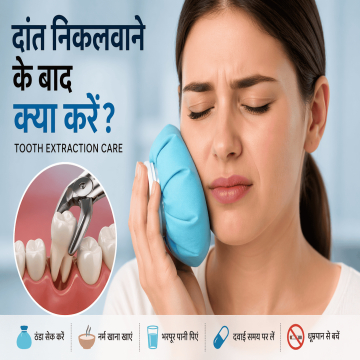
🦷 दांत निकलवाने के बाद निर्देश (Tooth Extraction Aftercare Guide)

दांत निकलवाने के बाद क्या करें? पहले 24 घंटे और उसके बाद की सही देखभाल जानिए Dr. Sunil Kumar, Bhiwani से।

✅ पहले 24 घंटे

  • दांत निकाली गई जगह पर रखी गई रूई को आधे घंटे तक दबाकर रखें।
  • पहले दिन गर्म व ठोस भोजन न लें। नरम और ठंडा खाना खाएं।
  • दांत निकालने के बाद थूकें नहीं व पानी से कुल्ला न करें। इससे घाव देरी से भरेगा तथा खून ज्यादा बहेगा।
  • सर्जरी के बाद पहले 8 घंटे तक दांतों पर ब्रश न करें।
  • सूजन से बचने के लिए दांत निकाली गई जगह के पीछे गाल पर हर 20–30 मिनट के बाद बर्फ या ठंडा तौलिया लगाएं।
  • एनेस्थीसिया का प्रभाव खत्म होने के बाद कुछ दर्द होना स्वाभाविक है, इसलिए डॉक्टर द्वारा बताए अनुसार दवाई लें।
  • दांत निकाली गई जगह से कुछ खून निकल सकता है। यदि यह 24 घंटे तक न रुके तो डॉक्टर को दिखाएं।

24 घंटे बाद…

  • दांत निकालने के एक दिन बाद दिन में कम से कम 8–10 बार एक सप्ताह तक नमक वाले पानी से कुल्ला करें। इससे घाव जल्दी भरेगा।
  • दांत निकाली गई जगह पर टूटी हड्डी जैसा दिखता है। यह सोचकर कि यह हुआ दांत है इसे जीभ या अंगुलियों से न छुएं। अपने दांतों के डॉक्टर से परामर्श करें।

महत्वपूर्ण सलाह

दिए गए निर्देशों का सही तरीके से पालन करने से

  • दर्द कम होगा
  • सूजन नियंत्रित रहेगी
  • घाव जल्दी भरेगा

Dr. Sunil Kumar ka Expert Tip

सही देखभाल के साथ दांत निकलवाने के बाद घाव जल्दी और बिना ज्यादा दर्द के ठीक हो सकता है। निर्देशों का पालन करना सबसे ज़रूरी है।

Conclusion

थोड़ी सी सावधानी से आप दर्द और जटिलताओं से बच सकते हैं। यदि कोई समस्या हो, तो तुरंत डॉ. सुनील कुमार, भिवानी से संपर्क करें।